
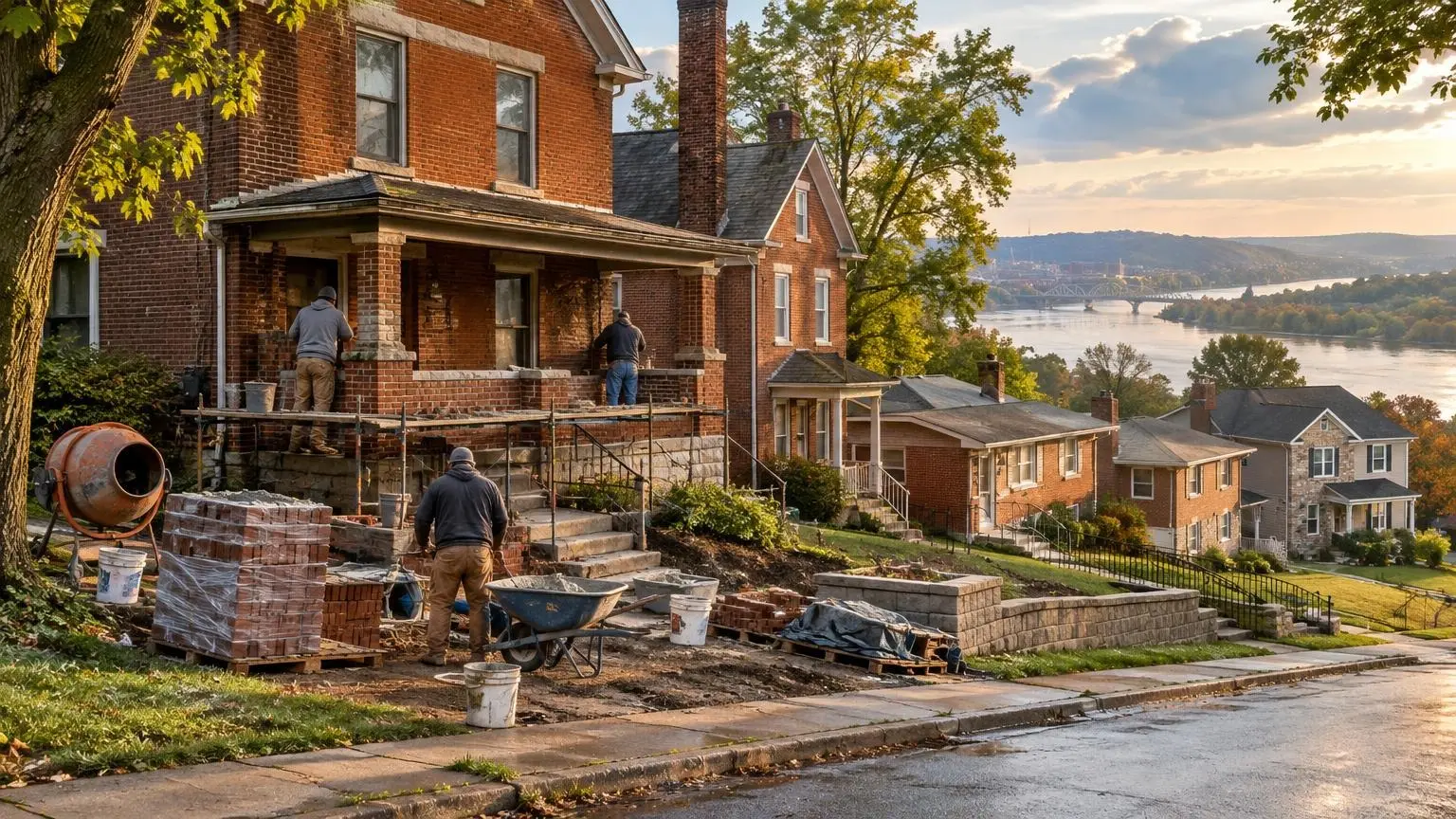
Brick, block and stone for an old brick city
Masonry Contractors in Louisville, KY
Tuckpointing, chimney repair, stone veneer, retaining walls and steps, priced in writing after we see the work.
- Free on-site look before any price
- Written quote broken out by task
- Mortar chosen to suit the age of your brick
Brick and Stone Work for Louisville Homes
Masonry Contractors Louisville repairs and builds brick, block and stone for homeowners in Louisville, Kentucky and the towns around it. That covers tuckpointing and brick repair, chimneys, stone veneer, retaining walls, garden walls and mailboxes, and masonry steps and porches. Louisville has a lot of brick to look after. The city was founded in 1778 on the Ohio River, and its Old Louisville neighborhood is described on Wikipedia as the largest historic preservation district made up solely of Victorian homes and buildings in the country. Most of those houses are brick. Further out, postwar ranches and split-levels are brick too. Good masonry contractors in Louisville spend most of their time keeping that brick dry and tight.
What wears out masonry here
Louisville's weather is hard on brick in a quiet way. On Wikipedia's climate table for the city, January averages a high of 43.6 degrees and a low of 27.8. That means many winter days start below freezing and end above it. Add 48 inches of precipitation a year and you get brick and mortar that are often wet when the temperature drops.
Water in the joints. Mortar is meant to wear before the brick does. Over decades rain washes it out, and open joints let water into the wall.
Freeze and thaw. Water inside a brick expands when it freezes. Repeat that enough winters and the face of the brick pops off, which masons call spalling.
Hard mortar on soft brick. A common mistake on older houses. Portland-heavy mortar is harder than old brick, so the brick takes the stress and cracks instead of the joint.
Ground movement. Steps, walls and porches built on shallow footings or poorly drained soil settle and pull away from the house.
Old houses and newer ones
Point2Homes, summarizing Census data, lists 1969 as the median build year for Louisville homes. About 13 percent were built in 1939 or earlier, and another 21 percent in the 1940s and 1950s. Those groups need different care.
In older neighborhoods the brick is often softer, the mortar was lime-based, and walls may be solid brick several layers thick rather than a veneer. That brick needs a soft mortar matched in color and joint shape, careful hand removal of old mortar, and gentle cleaning.
In the 1950s to 1970s suburbs, most houses have a single layer of brick veneer tied to a wood frame. The common problems are cracked mortar at window corners, missing or blocked weep holes, front stoops that have dropped, and chimneys whose crowns have cracked. Newer homes from the 1990s on often have manufactured stone on the front, where water getting behind the stone is the thing to watch.
Preservation districts and permits
Louisville Metro has eight local preservation districts: Butchertown, Cherokee Triangle, Chickasaw, Clifton, Limerick, Old Louisville, Parkland and West Main Street. Per the city's Local Preservation Districts page, exterior alterations in those districts and at individual landmarks need a Certificate of Appropriateness. The Landmarks masonry guidelines set out how historic brick should be handled:
- Repoint only joints that are no longer sound
- Remove old mortar with hand tools, not power grinders
- Use mortar no harder than the original, matched in color, texture and tooling
- No sandblasting, and no water over 300 psi
- Do not paint brick that has never been painted
We follow those methods on older homes whether or not the house is in a district, because they protect the brick. Outside the districts, Louisville Metro Construction Review says retaining walls over 4 feet tall need a building permit. If your project needs a review or permit, we tell you before we schedule.
Six kinds of work
- Brick repair and tuckpointing: grinding or raking out failed mortar and repointing, replacing spalled bricks, fixing cracks.
- Chimney repair: crowns, caps, flashing, repointing and rebuilding the section above the roof.
- Stone veneer: natural and manufactured stone on facades, wainscots, columns and fireplaces.
- Retaining walls: block, stone and brick walls with drainage behind them.
- Brick and block walls: garden walls, privacy walls, columns and mailboxes.
- Masonry steps and porches: brick and stone steps, stoops, porch piers and landings.
What a visit looks like
First look. We come out, look at the masonry with you, and find the cause of the damage. For a chimney or tall wall that can mean looking from a ladder or the roof.
The quote. A written price, broken out by task. If repair and rebuild are both reasonable, both are on the page.
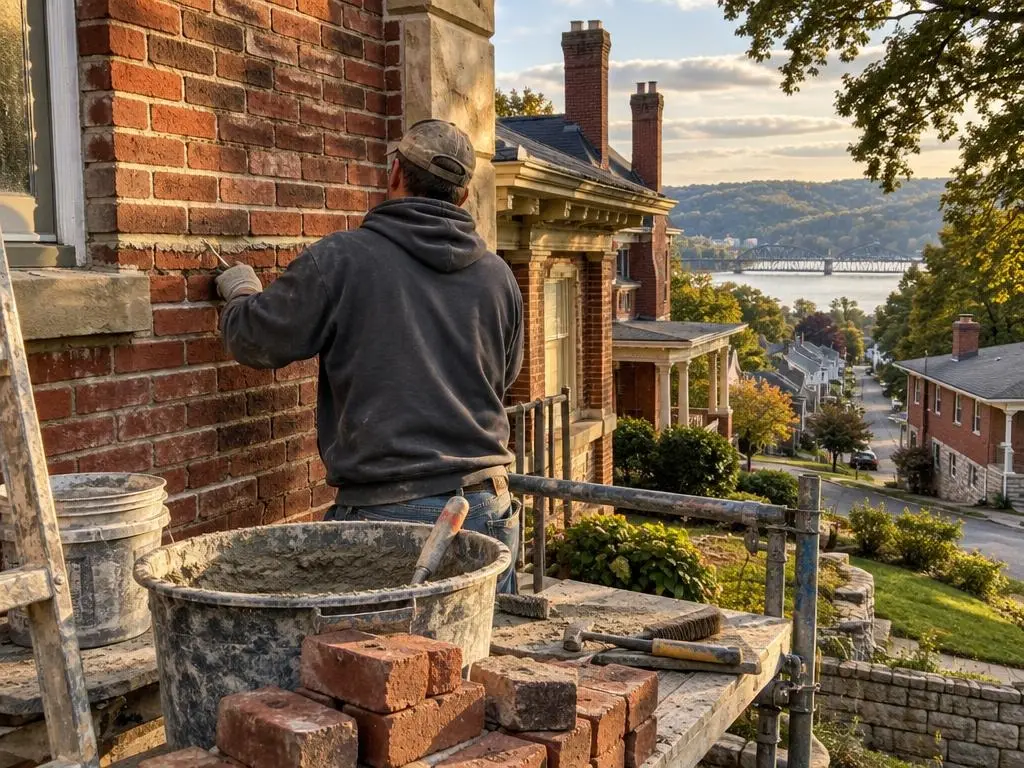
The work. Old mortar out to the right depth, new mortar packed and tooled to match, damaged units replaced, and drainage or flashing fixed where water was getting in.
Afterward. Fresh mortar needs to cure slowly, so we tell you what to avoid in the first weeks, like pressure washing.
When to call
Mortar and brick work goes best between spring and late fall, when nights stay above freezing and the mortar can cure. Small repairs can happen year round on mild days. If water is getting in now, through a chimney or a wall, call before the next winter and we will tell you plainly what has to happen first. Reach us at (502) 443-8557.
Why Homeowners Call Masonry Contractors Louisville
Mortar matched to the house
Softer lime-rich mortar for older soft brick, standard mixes for modern brick and block.
Task-by-task pricing
Repointing, brick replacement, flashing and drainage priced on their own lines.
Repair before rebuild
If repointing or a partial rebuild will hold, that is what we quote.
Preservation rules known
Hand-raked joints, gentle cleaning and Certificate of Appropriateness timing for district homes.
Common Questions
What does a masonry contractor do?
A masonry contractor builds and repairs structures made of brick, concrete block and stone, set in mortar. For homeowners that usually means tuckpointing, replacing damaged bricks, chimney repair, stone veneer, retaining walls, garden walls and steps. The job is as much about water as about the brick: most masonry damage starts where water gets in.
How much do masonry contractors charge per hour?
HomeAdvisor's brick repair guide lists mason labor at about $40 to $75 an hour, or a flat $1,000 to $2,500 per project, and its other guides list higher hourly figures, so rates vary. Most masonry is priced by the job rather than by the hour, because materials, access and scaffolding matter as much as time. Your written quote is the price.
What are the three types of masonry?
Most residential work falls into three groups: brick masonry, stone masonry and concrete block masonry. Brick is fired clay in uniform units, stone is natural or manufactured stone in varied shapes, and block is hollow or solid concrete units often used for foundations and retaining walls. Many projects mix them, like a block wall faced with stone.
What is the difference between stone masonry and brick masonry?
Brick units are all the same size, so bricklaying follows regular courses and bond patterns. Stone comes in irregular sizes, so each piece is fitted by eye and joints vary in width. Natural stone is usually heavier and costs more to lay, while manufactured stone veneer is lighter and installed over a prepared wall.
What should I ask residential masonry contractors in Louisville?
Ask what mortar they plan to use and why, how they will remove the old mortar, and how deep. On older brick, a good answer is a soft, lime-rich mortar and hand tools. Ask whether the price includes flashing or drainage if water is the cause, and whether your street is in one of Louisville Metro's eight preservation districts.
Do I need approval for masonry repair in Louisville?
If the house is in a local preservation district or is an individual landmark, Louisville Metro requires a Certificate of Appropriateness for exterior alterations, and its masonry guidelines cover repointing and cleaning. The city's preservation staff can be reached at (502) 574-6230. Outside the districts, routine repair usually needs no review, but retaining walls over 4 feet need a building permit.
How long does tuckpointing last?
HomeAdvisor says professionally repointed mortar lasts about 20 to 30 years, and up to 50 with good upkeep. Keeping gutters and downspouts working and stopping water at the top of walls and chimneys makes the biggest difference.
Can masonry repair be done in winter?
Small repairs can be done on mild days, but mortar should not freeze before it cures. Large repointing jobs are best scheduled from spring through fall. If water is coming in during winter, we can often make a temporary fix and finish the work when the weather warms.
Where We Work
Most of our work is in Louisville itself, from the older brick neighborhoods near downtown such as Old Louisville, Butchertown, Clifton and the Highlands, out to the postwar suburbs on the east and south ends of Jefferson County. We also work in the towns around the city: St. Matthews, Jeffersontown, Shively, Middletown and Prospect in Jefferson County, Shepherdsville and Mount Washington in Bullitt County, and Jeffersonville and New Albany across the Ohio River in Indiana. Each town page covers what we found about its housing and any local rules that affect masonry work. Since Louisville Metro and the small cities within it can handle permits differently, we confirm which office covers your address.
- Masonry Contractors in Louisville, KY
- Masonry Contractors in Jeffersonville, IN
- Masonry Contractors in New Albany, IN
- Masonry Contractors in Jeffersontown, KY
- Masonry Contractors in Clarksville, IN
- Masonry Contractors in Mount Washington, KY
- Masonry Contractors in St. Matthews, KY
- Masonry Contractors in Shively, KY
- Masonry Contractors in Shepherdsville, KY
- Masonry Contractors in Lyndon, KY
- Masonry Contractors in La Grange, KY
- Masonry Contractors in Middletown, KY
- Masonry Contractors in Hillview, KY
- Masonry Contractors in Crestwood, KY
- Masonry Contractors in Prospect, KY
- Masonry Contractors in Anchorage, KY
- Masonry Contractors in Pewee Valley, KY
- Masonry Contractors in Old Louisville, KY
- Masonry Contractors in Cherokee Triangle, KY
- Masonry Contractors in Crescent Hill, KY
- Masonry Contractors in Butchertown, KY
- Masonry Contractors in Okolona, KY
- Masonry Contractors in Fern Creek, KY
- Masonry Contractors in Valley Station, KY
- Masonry Contractors in Pleasure Ridge Park, KY
Our Masonry Services
Brick repair, chimneys, stone veneer, retaining walls, garden walls and steps for Louisville houses of every age.
Brick Repair & Tuckpointing
Failed mortar raked out and repointed, spalled bricks replaced and cracks repaired, with mortar matched to the age of the wall.
Learn more →Chimney Repair
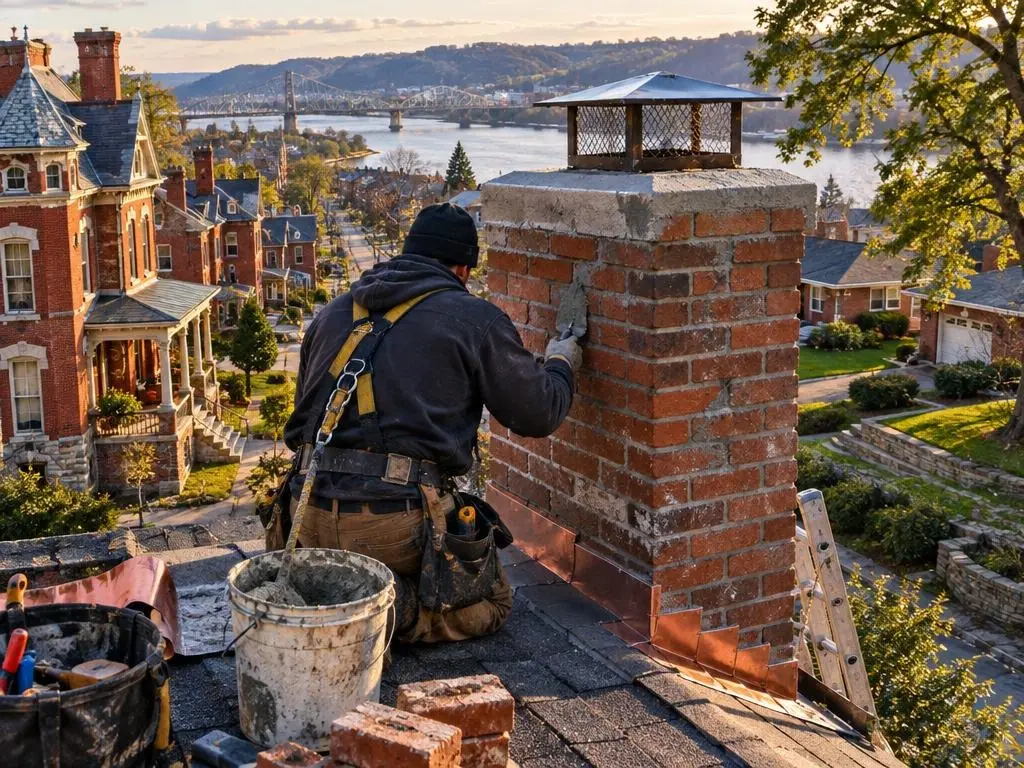
Crowns, caps, flashing, repointing and rebuilding the top of the chimney, to stop leaks and loose brick at the roofline.
Learn more →Stone Veneer
Natural and manufactured stone on facades, wainscots, columns and fireplaces, installed over a drained, flashed backing.
Learn more →Retaining Walls
Block, natural stone and brick retaining walls with a footing and drainage behind them, sized for the slope.
Learn more →Brick & Block Walls
Brick and concrete block garden walls, privacy walls, columns and mailboxes, built on proper footings.
Learn more →Masonry Steps & Porches
Brick and stone steps, stoops, porch piers and landings repaired, rebuilt or built new on solid footings.
Learn more →Get a Free Masonry Estimate in Louisville
We look at the brick, stone or block in person and price the work in writing, anywhere in Louisville and nearby towns.